
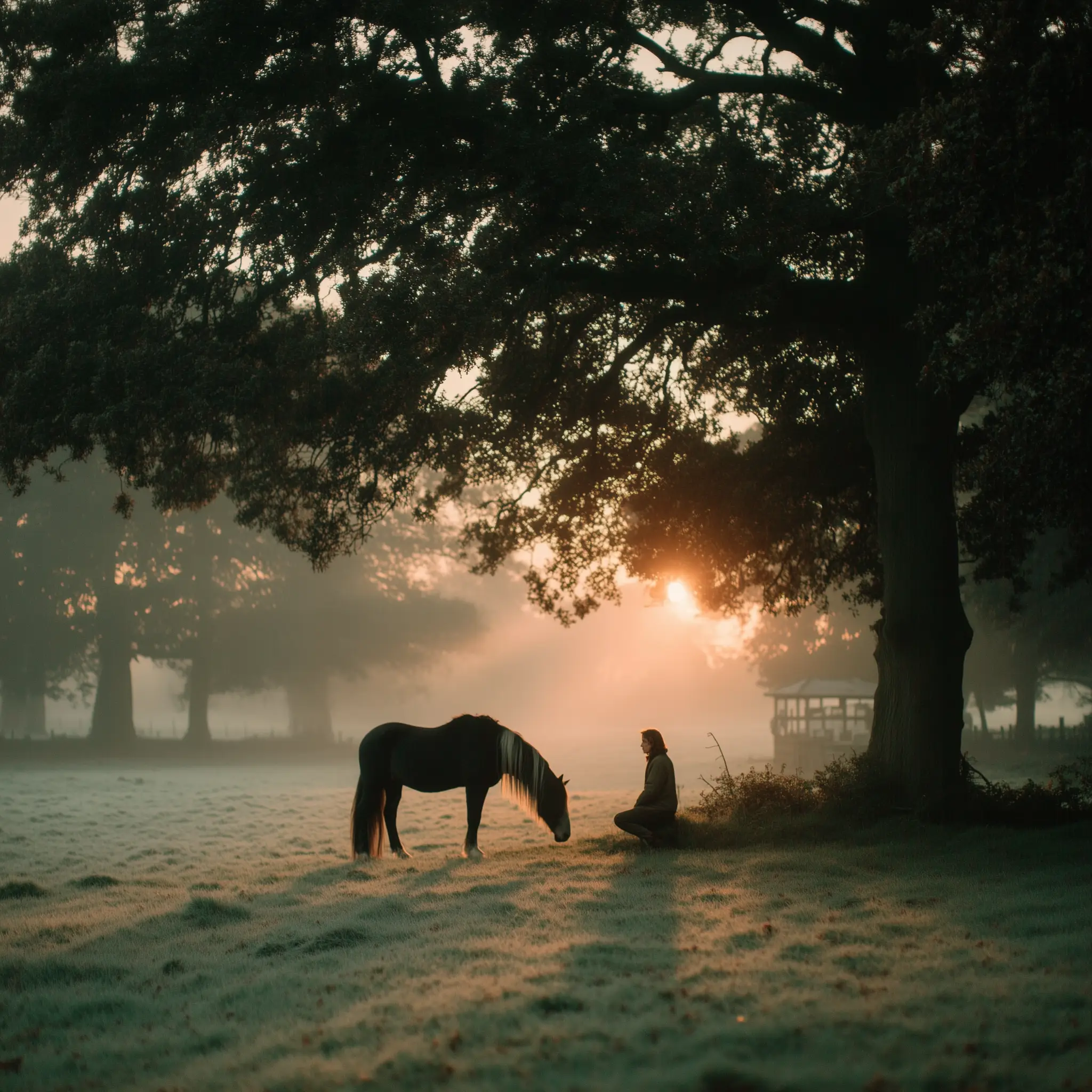
Horse Grooming: Building Trust and Friendship
Quiz
- What is the primary goal of the grooming exercise described in the source?
- Why is it important that the horse is "free" when performing this exercise?
- According to Rule Number Two, what should you avoid doing to keep the horse near you during grooming?
- How should you respond if the horse takes a small step forward or back while you are grooming?
- Why is it recommended to avoid using a lead rope or halter during this exercise?
- Where is the ideal location to perform the grooming exercise, according to the source?
- What is the significance of the horse having "something else to go to" during the exercise?
- What should be the focus of your actions during the grooming exercise, rather than simply removing hair?
- What are some physical signs that indicate the horse is enjoying the grooming session?
- According to Rule Number Eleven, how should your body be oriented relative to the horse during extended grooming?
Answer Key
- The primary goal is to build trust and friendship with the horse, allowing them to see you as one of the herd.
- The horse must be free so that their choice to stay with you during grooming comes from them and not from external restraint.
- You should never ask them to hold still or stay with you through words, actions, or even your thoughts.
- You should not follow them. A small step often indicates they want you to move to a different spot.
- Using a lead rope or halter can destroy the relationship you are trying to build because it restricts the horse's freedom.
- The ideal location is a large area, preferably on grass, where the horse has the freedom and space to walk away.
- If the horse stays because there is nothing else to go to, they are not choosing to be with you. They must have the option to pick you over other things like grass or pasture buddies.
- The focus should be on what the horse feels and experiences from your touch with the brush or curry comb, making it a pleasant experience for them.
- Signs that the horse is enjoying the grooming session include their eyes starting to close, their neck relaxing, and their breath becoming quieter.
- You should avoid facing the same direction as the horse for an extended period, as friends watch out for each other.
Essay Format Questions
- Discuss the rationale behind the emphasis on horse "freedom" throughout the grooming exercise rules and how it contributes to building trust and friendship.
- Analyze the significance of the horse having "something else to go to" as a critical component of the grooming exercise, explaining how it validates the success of the relationship-building effort.
- Explain how the recommended approach to grooming in the source shifts the focus from human convenience to the horse's experience and how this shift is intended to improve the relationship.
- Evaluate the potential negative effects of consistently tying up a horse for grooming and saddling, according to the source, and discuss alternative approaches suggested to mitigate these effects.
- Describe how paying attention to the horse's subtle cues during grooming, as outlined in the rules, allows for a more responsive and ultimately more positive interaction.