- Content Type: Book Chapter
- J3 Source Category: Front Page

MENTOR
is...
Learning Awareness
Finding Connection
Healing & Empowering Us
Our Horses & Our World
is...
Learning Awareness
Finding Connection
Healing & Empowering Us
Our Horses & Our World
Kjrsos ~ A Way to Live That Changes Things
This is how we become more powerful teachers, mentors & friends
To our horses, to each other, to the earth and to all living things.
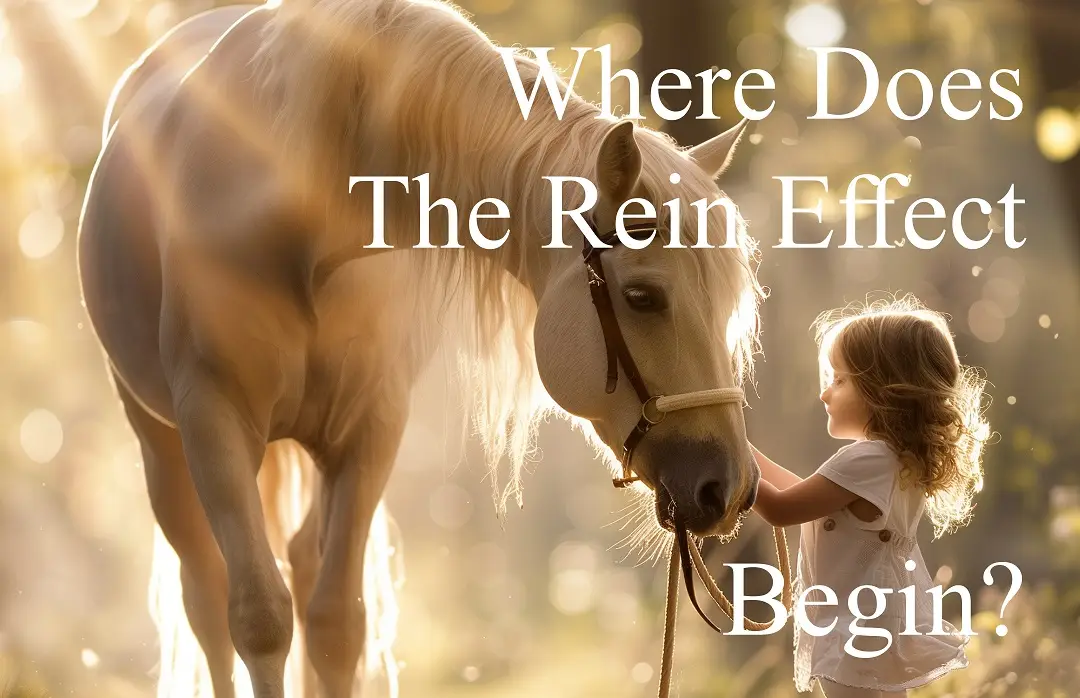
Where Does The Rein Effect
Begin/End???
As teachers, if we can't articulate where the Rein Effect Begins and Ends --
Then we fail our students, and we fail the horses.
Thank you to the one who shared this lesson with me and showed me one more time,
that if we want our horses to do better, then we need to fix ourselves first.
.
Already subscribed? Login and then return to this page to read!>
To read the rest of this free preview article & not subscribed!
Sign up for our FREE Explorer Subscription!
or
Interested in checking out our Magazine Subscription Options
>>
Note: Needs to be Introduced in Awareness Section maybe a Way to Meditate or Mindfulness Programs??? since we are talking about how to feel what the horse is feeling only possible if we free them. Final Determination depends on what this Equine Facilitated Awareness Program ends up becoming in full after final development.
Rein Effects Class Series
Rein Effect: Beginnings and Endings
This first lesson discusses where the "rein effect" needs to begin.
A principle that applies to all forms of horse handling—lunging, leading, or riding.
The real lesson though, based on first principles, is highlighting the importance of our self-awareness of what is in us and how that influences the horse. Building a healthy interconnectedness between ourselves and our horses.
Ultimately, the lesson advocates for a holistic approach that prioritizes the rider's self-improvement to achieve better communication and partnership with another living being the horse.
===================================================
Overview [Gemini]
This lesson discusses the "rein effect" in horse training, arguing that the rider's physical and mental state significantly impacts the horse's response, more so than any equipment or technique. The author recounts a personal experience where focusing on relaxation, starting from their lower back and flowing through their hands and reins, dramatically improved the horse's behavior and physical condition. The text emphasizes that a rider's subtle movements and energy transmission, rather than static hand position, are key. This principle applies to all forms of horse handling—lunging, leading, or riding— highlighting the importance of rider self-awareness and the interconnectedness between rider and horse. Ultimately, the text advocates for a holistic approach to training that prioritizes the rider's self-improvement to achieve better communication and partnership with the horse.
=================================================
Briefing Document
Briefing on Article With Gemini
Okay, here's a detailed briefing document summarizing the key themes and ideas from the provided excerpt "WhereDoesTheReinEffectEnd.pdf":
Briefing Document: "Where Does The Rein Effect End?"
Introduction:
This document analyzes the core concepts presented in the provided text, which challenges conventional thinking about the rein effect and rider-horse connection. The central argument emphasizes that the quality of the rein contact and its resulting effect on the horse is determined not only by hand position but by a deeper, full-body connection originating from the rider's core and extending through their arms and hands. The document suggests that many riding issues stem not from the horse, but from a lack of awareness and control within the rider themselves, particularly their own tension and movement.
Key Themes and Ideas:
The Rein Effect is More Than Just Hands: The excerpt challenges the notion that rein effect is solely about hand position. Instead, it argues that the rein is part of a larger chain, starting from the rider's lower back, flowing through the core, shoulder, arm, elbow, hand and fingers. The effect of the rein on the horse is determined by the rider's complete body position, energy and movement, not just their hands.
Quote: "What the horse feels from the rein depends on what we create in us. The rein is just a conduit to make that happen, to connect the two of us physically."
Rider Responsibility and Inner Awareness: A crucial point is that rider's personal physical state directly impacts the horse. It's the rider's responsibility to cultivate awareness of their own body, specifically their tension and movement. Many training issues blamed on the horse are actually caused by the rider's limitations or tension.
Quote: "And we need to remember that the change started with me, not with the horse."
Quote: "That 99% of the time, it is us, not the horses, that it is us who need to learn something new."
Quote: "Truly good training begins from the very first moment that we first touch our horses. Including through the rein, through the lead rope and through the lunge line."
The Importance of "Following" the Horse's Movement: The traditional idea of holding hands still is challenged. Instead, the text highlights that the hand should "mirror the placement and action of what is happening in the horse." This involves matching the energy and movement of the horse's body, which may appear as quiet stillness to the observer but is in fact a dynamic connection.
Quote: "The trick here is not to hold our hands still but to make it look like they are not. Two very different things."
Quote: "If you can match the energy and movement of what is happening in the body of the horse everyone will think that you are one of those brilliant riders that ride with their hands perfectly quiet."
The "Chain" of Influence: The text describes the connection as a chain, highlighting that restriction at any point in that chain will affect the whole system. Freezing the hands will ultimately freeze the elbows and shoulders, limiting the horse's movement and connection. The goal is not just to have loose hands but to have all parts of the rider from their lower back to their fingers to be able to move and have the appropriate energy.
Quote: "Freeze the hands, and the elbows and shoulders freeze as well. Stopping anywhere along the chain causes the pieces of the chain that follow to freeze as well."
The Lunge Line Experiment and the "Miraculous" Change: The author recounts a personal experience of applying these principles to a problem horse on the lunge line. The critical change was the realization that the “yield” the horse needed to feel had to come from the rider's core, lower back specifically, rather than just the hands, elbow, or shoulder. This resulted in a significant improvement in the horse’s movement and overall demeanor, showcasing that the horse's tension can be linked to the rider.
Quote: "I tried to feel that my hand began in my lower back. The information that this instructor shared that the yield the horse needed to feel came from there and not just from my hand, elbow or shoulder."
Quote: "But the change in the horse when I did get it, was nothing less than miraculous."
Quote: "The horse went from being a tense, flighty thoroughbred into a soft-bodied horse. Both physically and mentally. One whose muscles were relaxed throughout. One who was, for the very first time, stepping through and underneath himself easily even on his hard side."
Quote: "It was literally like seeing two different horses."
Application Beyond Riding: The text emphasizes that the principle of connecting from the core and "following" applies not just when riding but also when working with a horse on the lead or lunge line. It is a fundamental principle in all horse-human interactions.
Quote: "But what is really important is to realize that the lesson learned applies not only to the horse on the lunge line but also to the horse that we have in hand at the end of the lead rope AND when we are on their back AND when we are holding the reins."
The Start of Good Training: The document concludes by saying that good training is about the rider, and that it starts at the very beginning of their interaction with the horse. The rider should aim to not teach the horse to yield to them with tension, but to instead be relaxed and yielding themselves, to create a positive experience for the horse.
Quote: "As teachers, the first lesson that we need to teach our riders is that we need to start with us. But our riders can’t do that if we can’t give them all of the parts of the puzzle."
Conclusion:
The main idea of this document is to understand that the rider is responsible for the quality of the connection with the horse. It is critical for riders to understand that the rein effect starts from the rider's core and extends through all parts of their body, not just the hand. It argues for a more holistic approach to riding and horsemanship, placing emphasis on the rider's inner awareness, movement, and the connection, instead of focusing on just the horse's behavior. It encourages riders and instructors to challenge traditional techniques and understand the deep connection that is possible when a rider moves in harmony with their horse, and can truly “follow” their horse's motion. The idea is that by improving the rider, the horse will improve as a result.
=============================================================
FAQ's on article from Gemini
FAQ
What is the primary focus of improving the "rein effect," and how does it differ from traditional training approaches? The primary focus is on the rider's internal state and body, rather than the horse's behavior. Traditional training often focuses on correcting the horse or using new equipment, while this approach emphasizes the rider's ability to create a connection and flow of energy through their body, specifically starting from the lower back, that translates to a softer, more yielding experience for the horse. It’s about recognizing that problems often stem from the rider, not the horse.
How does the concept of "where the rein effect ends" challenge the traditional view of rein usage? The concept challenges the idea that the rein is just a physical piece of equipment that directly influences the horse’s head. Instead, it proposes that the rein is part of a chain of connection, beginning from the rider’s core, flowing through their arms, and extending through the rein to the horse's mouth. The rein’s effect ends when the rider limits that flow, potentially by freezing any part of the body's chain of movement. The "end" of the rein is thus not just the physical end of the leather but the point at which the rider's movement and energy stop flowing, limiting the horse.
Why is the rider's ability to mirror the horse's movement crucial for achieving a proper rein effect? Mirroring the horse's movement, especially the head movement at different gaits, allows the rider to appear still and quiet while actually moving in sync with the horse. This creates a feeling of harmony and allows the horse to move without restriction. It is not about holding the hands still, but creating the illusion of stillness through movement. This connection ensures that the rider's hands aren't disrupting the horse's natural movement patterns.
How does the "lower back connection" affect the horse's response to the rein? The idea is that a soft, yielding hand is not achieved solely through the hands, arms, and shoulders, but is a flow of energy that begins in the rider’s lower back. The horse can feel tension or release originating from this core area of the rider. By starting the release in the lower back, then letting the energy flow through the arms and to the hand, the rider can create a more gentle, connected and profound effect on the horse that the horse can feel and respond to by releasing its own tensions and moving with more ease and freedom.
What does it mean for a horse to become "soft-bodied," and how is this related to the rein effect? A soft-bodied horse is one that is relaxed both physically and mentally, with muscles that are no longer tense. This softness occurs when the rider's connection allows the horse to move freely, stepping underneath themselves with ease, rather than feeling restricted. This change demonstrates the powerful effect that a rider's soft connection can have on the horse's whole body.
Why does the author emphasize that improving the "rein effect" applies to more than just riding? The author stresses that the principle applies not only when riding, but also when using a lead rope or lunge line. It’s not just about rein usage, but about the connection and energy between the human and the horse in any situation. The goal is for the horse to feel consistently supported rather than restricted in every interaction. The principles are universal, and how we connect with and influence the horse starts from the very first moment of contact.
What does it mean that "true training is not to get the horse to yield to us" and what should trainers focus on instead? This means that true training should not be based on a forceful dominance of the rider over the horse to comply. Instead, it should focus on the rider making internal changes that allows the horse to connect more easily and willingly. The horse will naturally resist any tension, so true training emphasizes the rider's awareness of their own body and energy and what they are putting into their connection, ensuring that they are not unwittingly creating tension in the horse through their own restrictions. Trainers should begin with teaching their riders about these concepts to start the process of allowing them to develop a new level of feeling and connection with the horse.
Why is it so challenging to consistently achieve a good "rein effect," and what is the reward? It can be challenging because it requires riders to unlearn traditional, potentially restrictive methods and develop a deep awareness of their own bodies and how they transmit energy to the horse. It requires not only an intellectual understanding but also a physical transformation in the rider’s feel. This change takes time, focus and practice, and the reward is a transformative shift in the horse’s physical and mental state, from tense and resistant to soft, relaxed and connected. It's a "miraculous" change in the horse because the rider is changing and developing sensitivity themselves.
====================================================
Quiz for article from Gemini
The Rein Effect: A Deep Dive
Short Answer Quiz
According to the text, does the rein effect only apply to riding? Explain.
What was the initial change the author noticed when they achieved the correct inner focus while lunging?
Besides physical changes, what other transformation did the horse experience when the author achieved the correct feel in their hand?
What is the significance of the phrase "it started with me, not with the horse" in relation to training?
Why does the author now believe that steady hands do not mean static hands?
How does the gallop differ from slower gaits in terms of rider movement and what is the possible explanation?
What does it mean to mirror the placement and action of the horse, and what is the result?
How is the rein described as a part of a connection and what other body parts are part of this connection?
Explain how the author realized they were missing a very important part of the equation in terms of the hand and its connection to the horse.
What is the final piece that creates the most effective connection, and how does the author describe it?
Answer Key for Short Answer Quiz
No, the rein effect does not only apply to riding. The author states the principles discussed apply whether using a rein, lead rope, or lunge line, emphasizing that these principles are universally important for all horse handling.
The initial change the author noticed was that the horse became softer to the hands and for the very first time, completed a full and soft circle around them.
Besides physical relaxation and softer movement, the horse also experienced a mental change, moving from being tense and flighty to being relaxed and soft-bodied.
This highlights that training effectiveness often lies with the handler's internal state and understanding rather than solely focusing on correcting the horse's behavior.
The author realized that the horse's head moves during slower gaits. Steady hands need to mirror the movement of the horse instead of trying to be static.
The gallop is the quietest gait in terms of rider movement because the horse's body expresses full and equal power on all four corners, resulting in balanced movement.
Mirroring means matching the energy and movement of the horse's body; this creates the illusion of quiet hands, although the hands are actually subtly moving in response.
The rein is described as a conduit that connects the horse and the human. It is part of a chain that includes the fingers, hands, forearms, elbows, upper arms and shoulders.
They were missing a connection beginning in the lower back. While they were previously focusing on their hand, elbow and shoulders they came to realize there was a piece missing to the puzzle.
The final piece was the realization that the feel the horse needed began in the lower back, and extended through the arms and hands. It was not enough just to have a soft hand; it had to be part of a whole body connection.
Essay Questions
Discuss how the author's understanding of the rein effect evolved throughout the text. What specific experiences and insights contributed to their changed perspective, and what was the most significant shift in their thinking?
The text emphasizes that true training begins with the human. How does the author’s journey illustrate the importance of self-awareness and inner focus in the training process?
Compare and contrast the traditional approach to rein handling (holding still) versus the author's new understanding of mirroring the horse's movement. How does each approach affect the horse, and why does the author advocate for the latter?
The text describes the "chain" from the lower back to the hand to the rein. Analyze how different parts of this chain create different degrees of freedom and influence the horse.
What are the implications of the author's insights for equine training in general? How can instructors apply these concepts to help their students achieve a more effective and harmonious connection with their horses?
Glossary of Key Terms
Rein Effect: The overall impact of rein contact on the horse, which goes beyond the physical pull and includes the rider's intent and body position.
Inner Focus: The rider's ability to concentrate, self-reflect, and understand their own body and how it relates to the horse.
Mirroring: The practice of matching the horse's movement and energy with the rider's own body, especially through the hands.
Yielding: The horse's soft and relaxed response to the rider's aids, indicating a harmonious connection.
Connection: The link between the rider and horse, physical and emotional, which is created through a chain from the lower back to the rein to the horse's mouth.
Mobility: The ability of the rider and the horse's bodies to move freely and adapt fluidly to the motion and energy of the horse without tension or restriction.
Conduit: Something that acts as a channel for transmitting something. In this case, the rein acts as a channel to transfer energy and intent from the rider to the horse.
Hard Side: A description of one side of the horse that the horse finds difficult to relax and be mobile with.
Soft-Bodied: A horse that is relaxed, with supple muscles, both physically and mentally.
Chain: In this context the chain is the connection of body parts that create the influence of the rein. It begins in the lower back and moves through the shoulders, arms, hands and the reins.
======================================================
Research
Mindfulness and awareness are the foundations of meditation. But what’s the difference? If the term “mindfulness” is now part of the zeitgeist, “awareness” is somewhat harder to pin down.
In the context of meditation, both mindfulness and awareness are essential. In fact, the journey to understanding the mind and how to work with it is based on the synergy between the practices of mindfulness and awareness. Let’s have a closer look.
About mindfulness
Mindfulness has to do with fully and openly embracing the present moment. Sounds simple, right? But if you think about it, we spend our time doing anything but. First of all, to embrace the present moment you’ve got to be able to recognize it, whereas most of the time we’re pulled into the future by our hopes and fears, or we ruminate about the past and what needs to happen again or what should have been different. Or we simply give in to our dependence on distractions and daydreams to get us through.
But none of that’s real. The past is gone and the future never unfolds how we imagined it. The only thing that’s real in any way is the here and now. By making friends with stillness and presence, we learn that the here and now is much more satisfying than we suspected. In fact, it’s all we’ve got and it’s all we need.
When we practice mindfulness meditation, we’re training in recognizing the thoughts, sensations and emotions that arise in the moment and letting them pass by like clouds in a blue sky. To do this, we settle the mind on a focal point that is decidedly in the here and now, such as the rhythm of breathing or immediate physical sensations. Every time we realize that the mind has drifted away from its focal point, we gently but firmly bring it back. With a little practice, this form of meditation becomes a haven, a homecoming.
With mindfulness, we learn to recognize and acknowledge what’s going on in the mind, moment by moment, without judgment and with benevolence, and to let it go.
Between mindfulness and awareness
Our definition
Mindfulness is to be present in the moment
Awareness is feeling the connection with those lives present here with you. To feel that awareness.
Awareness is something you feel.
Mindfulness is the practice.
Awareness is the result of Mindfulness.
In regards with Kjrsos Meditation: Mindfulness is to bring your attention to nature. Awareness is when it works.
***************************************************
Mindfulness is to be present in the moment
Awareness is something you feel.
Mindfulness is the practice.
Awareness is the result of Mindfulness.
Kjrsos Meditation: Mindfulness is to bring your attention to the essence of life. Awareness is when it works.
*********************************************
Kjrsos Meditation: Mindfulness is to bring your attention to the essence of life. Awareness is when it works.
Mindfulness is what you do.
Awareness is something you feel.
Mindfulness is to be present in the moment.
Awareness is to find connection.
Mindfulness is the practice.
Awareness is the result of mindfulness.
The Purpose of Meditation
Give you a sense of calm, peace and balance that can benefit your emotional well-being and your overall health.
Help you relax and cope with stress by focusing on something that calms you.
Help you learn to stay centered and keep inner peace.
Increase focus, reduce stress, and promote calmness.
Train your attention and awareness, and create a calm, focused, and relaxed mental state.
That is what many think but that isn't where meditation started.
So what is the purpose of meditation? The main purpose of meditation is to strengthen your conscious mind so you can use your conscious mind to understand yourself, gain better control over your mind and body and get access to higher intelligence.
As the ancient philosopher Aristotle said, Knowing yourself is the beginning of all Wisdom. And the gateway to knowing yourself is to become more conscious. To become more conscious, you need to develop your conscious mind which is what meditation will help you do.
Not only will you become more wise through meditation, you will also gain better control over your mind, body and emotions.
For instance, you will start becoming free from the unconscious grasp of your conditioned mind. The beliefs in your mind will no longer be able to control you as strongly as before. Instead, you will be aware of them and hence more in a position to focus on beliefs that benefit you and let go of beliefs that limit you. Similarly, you will also gain better awareness of your emotions and hence your emotions will no longer wield the kind of control on you as they did before. Because of all this, you will no longer be a slave to your mind, instead, you will start to gain mastery over your mind so you can use your mind to do things that you want to instead of the mind using you.
This is why meditation is so powerful. Yes, it can help you relax and clear your mind, but that is just the tip of the iceberg. The real power of meditation comes as you begin to grow in consciousness.
Imagine a glass jar with only room for so many balls.
Each time we put in a white ball another black ball is pushed out.
Each time we put in a black ball another white ball is pushed out.
So depending on how many balls of any particular colour that you put in decides what percentage of white and black balls exist in that glass jar.
Now think of that glass jar as being you.
With only so much room available in our hearts or souls.
The white balls a moment of thankfulness. A moment of kindness. A kind thought. Joy watching a bird fly.
The black balls the opposite. Moments of unhappiness. Moments of depression. Moments forgetting to be thankful.
Your job to fill the glass jar.
Your decision on what colour it will be every day of your life.
This works when we are working on gratitude.
Works when we are working to fill our lives with awareness.
Works when we are learning to connect to life and making that a part of us once again.
A silly description maybe. But trust me this works.
Better than a vision board. An interactive activity to help you guide and choose your path and what and who you will become.
Because this is who you are on the inside.
You choose what colour balls you put in.
You choose which ones to keep.
You are the one that chooses which ones to let go.
First Read: The Importance of Beginnings, The Golden Thread
To understand where our beginnings are, we need to understand the endings we are striving for. There needs to be a clear connection between the two to ensure we don't go off course.
So when we meditate where is it that we mean to go? What is the purpose of meditation?
I think many people think it is to learn to keep the mind quiet.
Funny how the how has become the why is so many people's minds.
Because that is what finding the quiet is. It is a how. It was never meant to be the why.
How do you know this is true?
Well ask yourself if the quiet is a why, what does the quiet give you? Be careful when you answer that you are not stating where it takes you to. Because then again it is a how not a why. The quiet taking you somewhere else is how you get there. The quiet itself has to be the why if that is your answer.
What the Quiet Gives You
The quiet gives you room. Gives you room for something else to come in.
Reference Article: Black and White Balls
"So That We Can See"
From Chapter44 STWCS ~
Concepts
Changes to the Brain
Neuroscientist Sara Lazar when she took up yoga for the stretching benefits when she was trying to heal after sustaining injuries training for the Boston Marathon. Listening to her yoga teacher exclaim on the benefits of yoga beyond stretching, which was the only reason she was there, she was skeptical, and who could blame her. But then she started to notice... noticed she was becoming calmer. She noticed she was able to see things from other people's point of view in a new way than before and that intrigued her. She began to wonder how that was possible?
Curious, Lazar started researching the available scientific literature only to discover the concept of mindfulness meditation. Of how in this ancient Buddhist practice, they considered there to be a universal human capacity that fostered clear thinking and open-heartedness that can lead to being fully and attentively present in the moment. Another way to meditate.
Seeing a growing body of knowledge on the benefits, and after her own experiences, she was inspired to do her own research. And as a neuroscientist, she knew just where she wanted to start.
Surprisingly discovering that meditation could result in real-life physical changes to the brain.
Specifically, noting increased gray matter in the auditory, sensory cortex, insula, and even in the frontal cortex. The research showed areas of the brain amplified that are known to be involved with compassion and empathy, perception, motor control, self-awareness and more.
The researchers also noted that where normally, over time, we can see degradation, cortexes shrinking as people age, fifty-year-old meditators instead showed the same amount of grey matter as those half their age. Lazar and her team wanted to make sure this wasn't because the long-term meditators had more gray matter, to begin with, so they conducted a second study. In this study, they put people with no experience with meditation into an eight-week mindfulness program.
The results? Even just eight weeks of meditation changed people's brains. There was thickening in several regions of the brain, including areas of the brain that involve learning, memory and emotional regulation. Perhaps more importantly, other areas grew as well, areas that involve empathy and our ability to take on multiple perspectives.
While certain areas of the brain increased, there were decreases in other regions of the brain.
Specifically, in the shrinking of the amygdala, a part of the brain associated with fear, anxiety, and aggression. This reduction in the size of the amygdala correlating to reduced stress levels in the participants. All of this with only an average meditative practice under half an hour a day.
Other studies show a thickening of the corpus callosum with long-term experienced meditators. The corpus callosum is the structure that connects the right and left sides of the hemispheres of the brain. Creating the suggestion that there is more of a connection, more of a conversation happening between the two sides of the brain for those active in a meditative practice.

Chapter 44 Notes - Insights to Share

{show-else}Subscribe to the Book to Read the Rest of the Page{/show}
Strange to think that you can stumble into a practice of meditation without your awareness.
We now think that there might be twenty-five or more senses, so many ways for us to record to take in what we are experiencing. But our awareness limited because that is what awareness is, forever limited.
We started out long ago as perception. Back when we started out as single cells. We perceived our environment through our membrane skins filled endlessly with receptors. Our receptors connecting us to that which is other than us. Us lives inside the membrane, other than us lives outside. The only connection between the two, the perceptions we received because of the receptors in our skins. There was no thinking there was only experiencing.
Somewhere along the way, an evolution occurred.